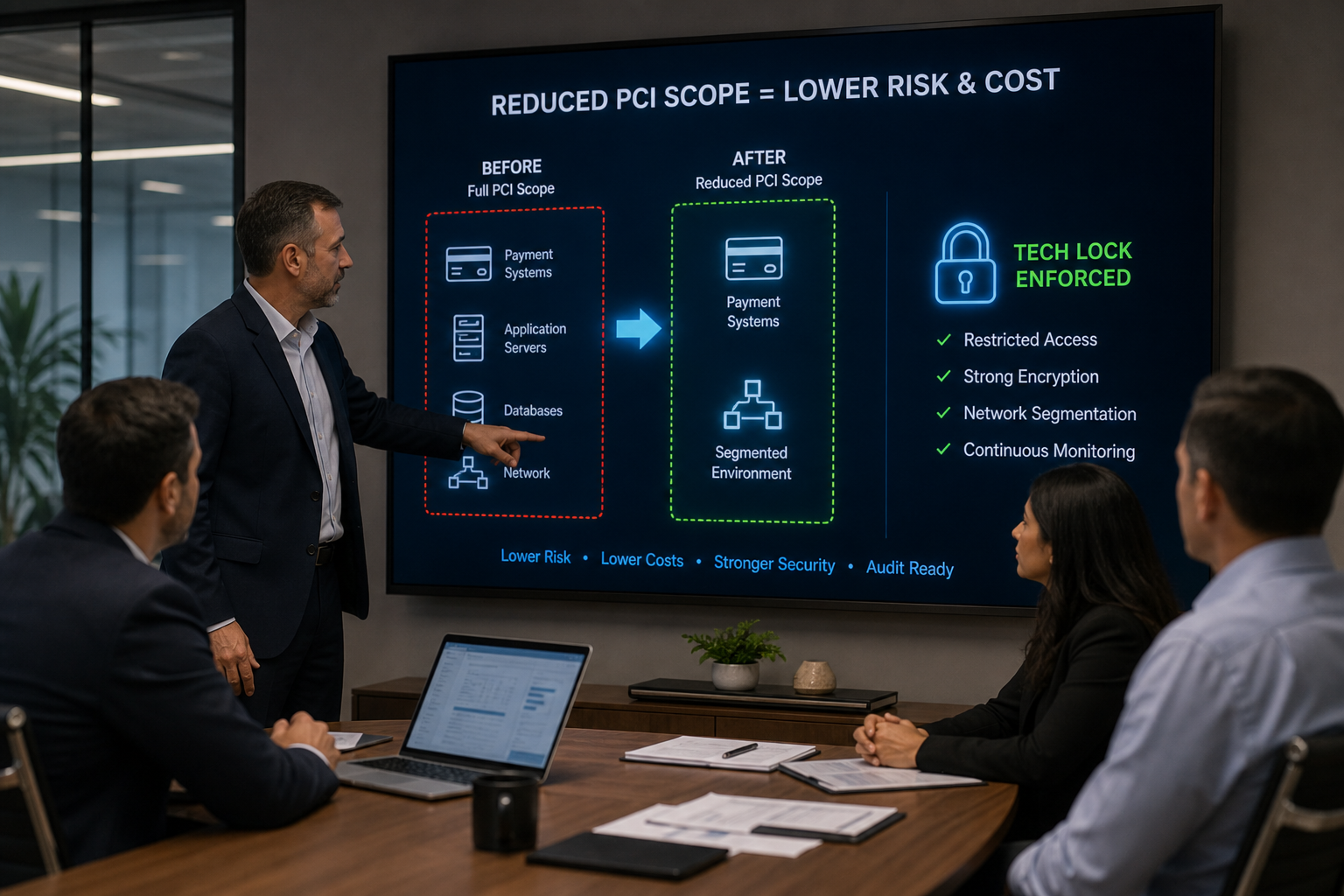
PCI DSS scope reduction is the most effective lever for cutting compliance costs. Every system, application or network component that touches card data enters the PCI perimeter and must be controlled, documented and audited. Reducing scope means reducing the number of in-perimeter components, and consequently the cost and complexity of the entire compliance programme. There are 3 concrete levers to do so, applicable by any merchant or PSP.
What PCI DSS scope is and why reducing it pays off
PCI DSS scope includes all systems and processes that store, process or transmit payment card data, plus all components that connect to these systems or that could impact their security. In practice, this includes application servers, databases, firewalls, authentication systems, networks, operator workstations and much more. For a mid-sized company, unmanaged scope can easily touch 50-100 distinct components, each requiring specific controls.
The cost of a QSA (Qualified Security Assessor) audit for a broad perimeter runs to tens of thousands of euros, to which internal preparation, documentation and remediation costs must be added. Reducing scope by 70-80% is not uncommon with the right techniques, and cost reduction is proportional.
The 3 levers for reducing scope: tokenization, segmentation, outsourcing
The first lever is tokenization: replacing PANs in cleartext with opaque tokens before they enter corporate systems. A token has no value for an attacker and does not fall within the PCI DSS perimeter. All systems that previously handled card data (CRM databases, billing systems, application logs) can continue to operate with tokens without being in scope.
The second lever is network segmentation: physically or logically isolating systems that handle card data from the rest of the infrastructure. A flat network where all systems communicate with each other is a scope multiplier: it just takes one server connecting to an in-perimeter component to enter the perimeter itself. Segmentation with dedicated firewalls, separate VLANs and granular access controls drastically reduces the number of components included in the audit. The third lever is outsourcing the CDE to a PCI DSS Level 1 certified provider: delegating the entire card data vault to an external service moves outside your infrastructure the most critical and most expensive component to maintain in compliance.
How PCI Proxy EU applies all three at once
PCI Proxy EU combines the three levers in a single integrated solution. The PCI DSS Level 1 certified vault receives card data on behalf of the company, encrypts it and returns a token. The merchant's infrastructure never sees a PAN in cleartext: tokenization happens before the data enters the company perimeter. Network segmentation is already built into the service architecture, which operates on an isolated, certified CDE.
The practical result for most merchants is the ability to complete an SAQ A or SAQ A-EP instead of a complete Report on Compliance. Documentation to prepare shrinks from hundreds to dozens of pages. Technical controls to implement drop to a fraction of those required by an unoptimised perimeter. The internal team can focus on business instead of continuously managing a complex security programme.
Frequently asked questions
Does reducing PCI scope mean being exempt from all controls?
No. Reducing scope means fewer components fall within the perimeter to be audited, but the components that remain in scope must still satisfy all applicable PCI DSS requirements. Reduction lowers costs and complexity, it does not eliminate compliance.
How much can you save with a reduced scope?
It depends on company size and the starting point. On average, a merchant moving from a broad perimeter to SAQ A through tokenization reduces compliance costs by 60-80%. Savings include both direct audit costs and internal preparation, documentation and remediation costs.
Does scope reduction need to be documented?
Yes. The QSA or the merchant itself must document how and why certain components have been excluded from the perimeter. For tokenization, this means demonstrating that no PAN in cleartext transits or is stored in out-of-scope systems. Documentation is part of the SAQ or ROC.
Want to reduce your PCI scope with tokenization, segmentation and outsourcing in a single integration? Discover PCI Proxy EU.